Master Rapid Learning: 8 Science-Backed Biohacks and Neuroplasticity Microhabits to Future-Proof Your Brain.
1) The science of microhabits and brain plasticity

Your brain is constantly rewiring itself — a property called neuroplasticity. Small, repeated actions can lead to meaningful changes in how you think and remember. The key is consistency, not intensity. Think of microhabits as tiny, doable steps that accumulate: a 5-minute reading sprint, a 3-question recap after every video you watch, or a 10-minute journaling habit before bed. These microbursts recruit neural networks responsible for attention, memory, and retrieval, making it easier to learn complex topics over time.
What to try:
- Use the “two-minute rule” to kick off a new subject. If you want to learn about climate tech, read two pages or watch a two-minute explainer daily, and gradually increase.
- Create a simple retrieval practice routine: after reading, close the book and recall the main points aloud or in writing.
- Space your study sessions. Short, spaced repeats outperform marathon cram sessions, even for adults juggling work and family.
2) Spaced repetition meets modern learning platforms

Spaced repetition is not new, but the way we implement it has evolved with technology. Modern flashcard systems can adapt to your forgetting curve, scheduling reviews just as you’re about to forget something. This aligns with the rising trend of personalized learning tech and microlearning apps that tailor content to your pace.
Tips for maximizing it:
- Break complex topics into bite-sized cards: one card per concept, example, or test question.
- Schedule reviews across days or weeks, increasing intervals as you demonstrate mastery.
- Mix content types in a single session: a card on a concept, a practical application, and a quick quiz question to reinforce retrieval.
3) Sleep, circadian rhythms, and peak learning
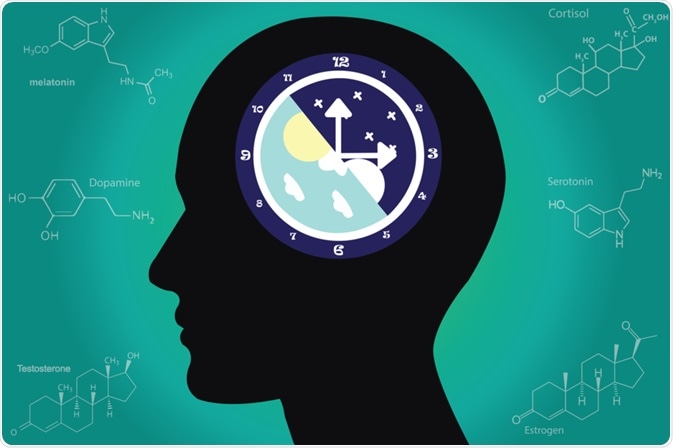
Sleep isn’t a luxury; it’s a performance enhancer. Research continues to show that memory consolidation and creative problem-solving depend on quality sleep, especially the REM and slow-wave stages. In a world where late-night screen time is common, smart sleep hygiene is a learned skill.
Practical sleep optimization:
- Maintain a consistent wake-up time, even on weekends, to stabilize your circadian rhythm.
- Create a pre-sleep wind-down: dim lights, a tech cutoff 30–60 minutes before bed, and a light, non-stimulating activity like reading.
- Consider a short, strategic nap (10–20 minutes) in the early afternoon to refresh attention without interfering with nighttime sleep.
4) The rise of evidence-based productivity tools (without AI obsession)

Productivity tools aren’t only about efficiency; they’re about smarter learning. The trend is toward tools that help manage attention, reduce cognitive load, and capture insights across formats—text, video, audio, and hands-on practice.
What to adopt:
- A single capture system: capture ideas, questions, and summaries in one place (note-taking apps, digital notebooks, or a physical journal that you review weekly).
- A lightweight project map: outline what you want to learn this month, why it matters, what evidence you’ll gather, and how you’ll demonstrate mastery.
- Regular “reflect and adjust” sessions: monthly checks to prune topics that aren’t resonating and double down on what is.
5) Memorable cross-domain learning:
Connect ideas across topics
One of the oldest wisdoms in education is that interdisciplinary thinking accelerates understanding. The latest cognitive science supports this: analogical reasoning, where you map concepts from one domain to another, strengthens retrieval and transfer.
How to apply:
- Pick two seemingly unrelated topics and extract a few core concepts from each. Try to connect them with a simple analogy. For example, compare a supply chain to a neural network pathway, or relate solar panel efficiency to feedback control systems in engineering.
- Build “concept maps” that visually connect ideas across domains. Visual representation helps with recall and reveals hidden relationships.
- Practice explaining complex ideas to a layperson. Teaching others is a powerful way to consolidate your own knowledge.
6) Staying curious in a fast-changing world (without overloading)

Trends like sustainable tech, space exploration milestones, and biotech breakthroughs are reshaping what we learn and why. The goal is not to chase every trend but to cultivate a mindset of continuous, disciplined curiosity.
Ways to stay in touch with the latest:
- Subscribe to a few high-quality, topic-diverse newsletters that summarize breakthroughs with practical implications.
- Schedule a weekly “trend review” session where you pick one news story, break down its core idea, and note potential questions for deeper learning.
- Balance depth with breadth: spend more time on topics where you can apply knowledge (e.g., environmental policy if you work in sustainability) while occasionally exploring adjacent fields to stimulate flexible thinking.
7) Hands-on practice and real-world application

Learning isn’t just reading; it’s doing. Hands-on practice cements knowledge in a way that passive consumption cannot. This is especially true for technical topics—coding, data analysis, engineering, or science experiments.
How to incorporate:
- Create mini-projects that require applying what you’ve learned. Document your process and results to reinforce learning.
- Use problem-based learning: tackle a real-world problem in your community or workplace, then reflect on what worked, what didn’t, and what you’d improve.
- Incorporate quick experiments or prototypes into your routine. Even simple demos or simulations can reveal gaps in understanding.
8) The ethical and social dimension of rapid learning

As knowledge accelerates, so does the responsibility to use it wisely. Critical thinking, media literacy, and ethical reasoning should accompany any new skill or technology you explore.
Practical guardrails:
- Verify sources and seek evidence from multiple perspectives, especially on controversial or rapidly evolving topics.
- Consider impacts on privacy, equity, and environmental sustainability when adopting new tools or practices.
- Share what you learn: teaching someone else is both a test and a reinforcement of your understanding, and it helps democratize knowledge.
A concise, doable plan to start this week
- Pick one microhabit to start today (5–10 minutes): a short reading, a quick retrieval exercise, or a targeted drill on a topic you’re curious about.
- Choose one topic for a 4-week spaced repetition loop and build a small deck of cards or notes around it.
- Schedule a 20–30 minute weekly trend review and a 30-minute hands-on project related to that topic by week four.
- End each session with a 2-minute reflection: what did I learn, what surprised me, and what will I do next?
In a world buzzing with rapid change, learning smarter—not harder—gives you leverage. By leveraging microhabits, spaced repetition, sleep-friendly routines, cross-domain thinking, and hands-on practice, you can turn curiosity into lasting competence. The trend lines in education, neuroscience, and productivity all point to one core idea: small, consistent, and well-structured efforts compound into real brain upgrades over time.
Start small, stay curious, and watch your understanding grow.
Comments
Post a Comment