Top 2026 Tech Trends: Navigating Edge AI, 6G, Quantum Computing, Digital Twins, and Zero Trust for Sustainable Innovation

Technology is evolving at a pace that can feel exhilarating and overwhelming at the same time. As we move deeper into 2026, several trends are converging to reshape how we work, learn, and interact with the world. This post surveys the most impactful tech shifts you should know about today, with practical implications you can observe, learn from, and even leverage in your daily life.

First, quantum computing is no longer a distant fantasy; it’s inching toward practical demonstrations and early-use cases. Enterprises across finance, logistics, and drug discovery are piloting hybrid systems that combine classical processors with quantum accelerators to tackle optimization problems, molecular simulations, and complex risk models that were previously intractable. For individuals, this means paying attention to quantum-ready workflows, specialized hardware updates, and the growing ecosystem of software tools and tutorials that teach problem framing in quantum terms. Expect more open challenges, university-led partnerships, and startup accelerators focusing on quantum literacy and developer tooling. Keywords to watch: quantum advantage, qubits, quantum error correction, hybrid quantum-classical, quantum-safe encryption.

Edge computing continues to outrun centralized cloud in latency-sensitive applications. The proliferation of Internet of Things devices—from industrial sensors to autonomous vehicles and smart cities—requires processing power closer to data sources. This reduces bandwidth costs, enhances privacy, and enables real-time decision making. We’re seeing a surge in tiny, energy-efficient AI chips designed for on-device inference, coupled with secure enclaves and trusted execution environments to protect data as it streams through edge networks. The practical upshot: more responsive apps, safer industrial operations, and new business models around edge-as-a-service. For developers and decision-makers, the key is to design systems that can seamlessly orchestrate workloads across edge and cloud, with robust observability and security policies. Keywords: edge AI, MEC (multi-access edge computing), latency, data sovereignty, federated learning.

6G and the next wave of wireless innovation are entering the conversation earlier than you might expect. While 5G continues to expand, researchers and operators are already sketching what 6G could enable: terabit-per-second speeds, ultralow latency, and intelligent networks that can adapt in real time to user contexts, environmental changes, and network congestion. The implications reach beyond faster downloads to revolutionary applications like holographic collaboration, tactile internet, and highly reliable industrial communication. For consumers, 6G remains aspirational this year, but precursor technologies—AI-driven network optimization, advanced beamforming, and more capable satellite links—will shape new consumer experiences, from immersive remote work to resilient connectivity in challenging environments. Keywords: 6G, holographic communications, network slicing, satellite-on-a-chip, terahertz bands.

Digital twins and synthetic data are becoming mainstream tools in product design, urban planning, and healthcare. A digital twin creates a live, data-rich mirror of a real-world system, allowing engineers and scientists to simulate scenarios, test changes, and predict outcomes without costly real-world experiments. Combined with synthetic data—data generated to train models when real data is scarce or sensitive—this trend accelerates innovation while safeguarding privacy. Businesses are using digital twins to optimize manufacturing lines, reduce downtime, and anticipate maintenance needs. In healthcare, digital twins of organs or patient cohorts enable personalized treatment planning and drug discovery. The practical takeaway: invest in data quality, interoperable models, and governance so your digital twin ecosystem can scale with confidence. Keywords: digital twin, simulation, synthetic data, model-based design, validation.

Sustainable and responsible technology design is moving from a niche concern to a baseline requirement. Consumers and governments demand energy efficiency, down-to-earth lifecycle thinking, and transparent supply chains. This drives improvements in battery technology, green computing, and responsible AI governance. New materials, such as solid-state and lithium-sulfur batteries, promise higher energy density and safer usage. In computing, energy-aware architecture, low-power chips, and efficient cooling are reducing the carbon footprint of data centers and edge devices. On the software side, privacy-by-design, explainability, and bias mitigation are becoming table stakes for any product that handles data or automates decisions. If you’re a creator, prioritize sustainable choices in hardware selection, vendor sustainability profiles, and user empowerment around data privacy. Keywords: green tech, energy efficiency, battery tech, carbon footprint, responsible AI.

Cybersecurity and privacy continue to be central in a world of rapid digital transformation. As more devices connect and more data flows through networks, the attack surface expands. We’re seeing a rise in zero-trust architectures, hardware-backed security modules, and privacy-enhancing technologies that let people control what they share without sacrificing service quality. Ransomware is evolving with better data exfiltration techniques, so organizations need robust backup strategies, fast incident response, and security-by-design from the ground up. For individuals, adopting multi-factor authentication, software supply chain vigilance, and regular privacy hygiene is no longer optional. Keywords: zero trust, supply chain security, MFA, ransomware, privacy-enhancing tech.
Biotechnology and biotech-enabled tech are intersecting with information technology more than ever.
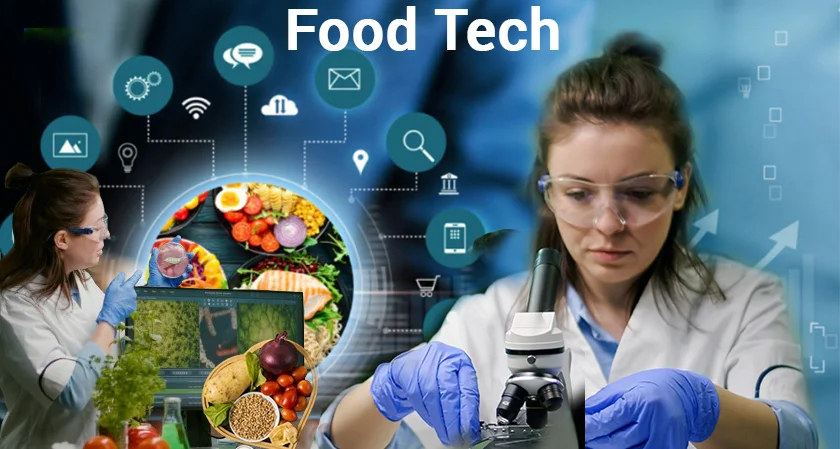
In food tech, gene editing, fermentation-based production, and precision agriculture promise to increase yields while reducing environmental impact. In healthcare, digital health tools, wearables, and remote monitoring are enabling preventive care and personalized medicine. The convergence of biotech with data science raises opportunities for predictive health, but also ethical and regulatory considerations. If you’re curious, explore courses or articles that explain how biology and data science intersect, and consider how data governance applies to life sciences. Keywords: biotech, CRISPR, synthetic biology, digital health, precision medicine.

Creative and educational tech are expanding access to knowledge in surprising ways. Learning platforms are leveraging AI for personalized tutoring, immersive simulations, and hands-on virtual labs. The trend isn’t about replacing teachers but augmenting instruction with adaptive feedback, practical experiments, and global collaboration. For lifelong learners, this means more opportunities to acquire new skills efficiently and at scale. If you’re building content or teaching, think about how to combine real-world experiments, data literacy, and critical thinking into your curriculum, while ensuring accessibility and inclusive design. Keywords: edtech, personalized learning, virtual labs, immersive experiences, lifelong learning.
In today’s fast-moving landscape, a balanced approach is essential. Technology offers extraordinary tools to learn faster, solve hard problems, and connect with others more effectively. But the most valuable outcomes come from combining curiosity with critical thinking, ethical considerations, and practical action. To stay ahead, consider these concrete steps:
- Experiment with small, safe edge computing projects at home or in a local makerspace to understand latency, data flow, and security.
- Follow open-source communities around quantum computing and digital twins to keep a pulse on practical tooling and tutorials.
- Build a personal learning plan that blends basics of emerging tech (6G, AI governance, battery tech) with hands-on projects or courses.
- Prioritize data privacy and security in daily digital habits: strong authentication, regular software updates, and mindful data sharing.
- Seek diverse perspectives on technology’s impact—ethics, policy, and social implications matter as much as code.
If you’re looking to deepen your knowledge, consider subscribing to newsletters that curate breakthroughs across quantum computing, edge networks, renewable tech, and digital ethics. Attend talks or webinars featuring practitioners from different industries to see how these trends manifest in real-world problems. And most importantly, remember that the pace of change is an invitation to continuous learning: ask questions, test ideas, and stay curious about how new technologies can empower you and your community while respecting human values and the planet.
Trending keywords: AI, quantum computing, edge computing, 6G, digital twin, synthetic data, privacy-by-design, zero trust, green tech, battery tech, autonomous systems, immersive tech, edtech, cybersecurity, blockchain not overemphasized, sustainable technology, responsible innovation.
Comments
Post a Comment